
On This Day in Wembury, 11 September 1806
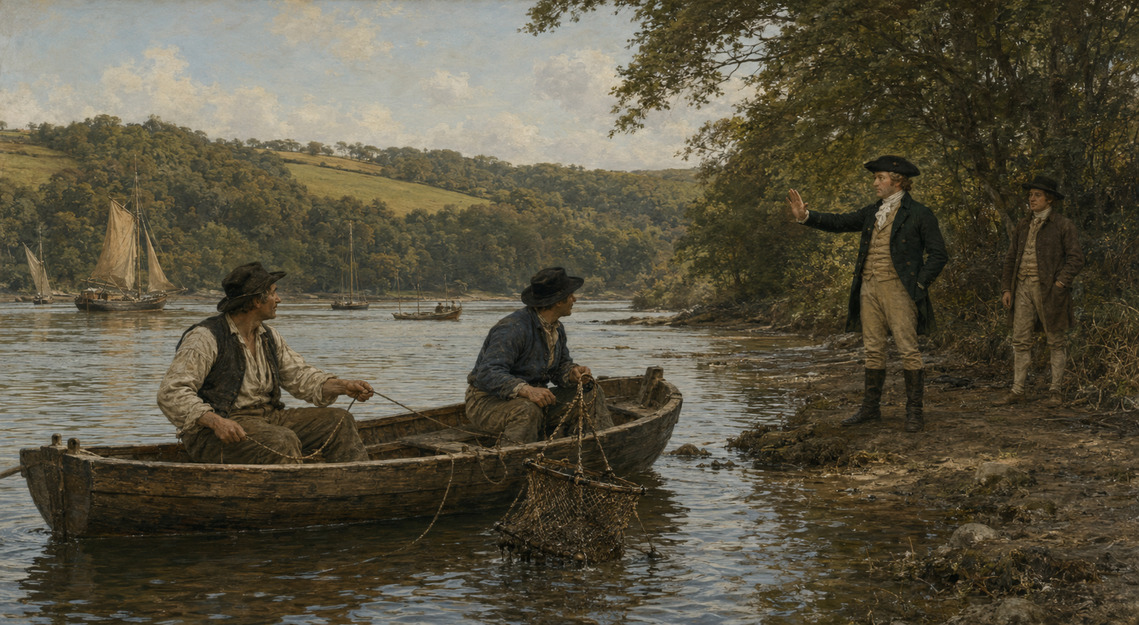
Thomas Lockyer warns poachers off the Manor of Wembury
On this day in 1806, the Exeter Flying Post carried a stern public notice from Thomas Lockyer of Wembury House.
Lockyer requested that nobody should shoot, kill or take game anywhere within the Manor of Wembury without first obtaining his permission. Even those legally entitled to shoot were told to stay away unless he had personally consented.
Anyone subsequently found hunting, killing or destroying game, or committing any other trespass upon the manor, would be prosecuted with the full rigour of the law.
Lockyer’s warning did not stop at the land. He also asserted extensive fishing and commercial rights over the River Yealm.
The notice claimed that the whole river, as far upstream as the tide flowed, formed part of the Manor of Wembury together with its fishery. Lockyer insisted that nobody other than his appointed tenant, or someone holding rights directly from him, could catch, take or dredge for fish of any kind.
This would have covered far more than someone standing on the bank with a fishing line. The reference to dredging probably included the collection of oysters and other shellfish from the riverbed, which could provide a valuable source of food and income.
Lockyer also claimed the right to collect tolls and river dues from vessels using the Yealm. His tenant was authorised to charge for passage, anchorage and ballasting.
Ballast was heavy material carried by a vessel to improve its stability. In a tidal river this could involve ships taking sand, gravel or stone from the riverbed, an activity from which the holder of the river rights expected to receive payment.
The notice effectively warned local fishermen, boat owners, sportsmen and neighbouring residents that the river and its resources were not free for everyone to use. Lockyer regarded them as valuable rights belonging to the manor and was prepared to defend them through the courts.
Thomas Lockyer was an important local landowner living at Wembury House. Parish records later describe him as an esquire and record several of his children with his wife Jane.
It is impossible to know whether the notice followed a particular incident involving poaching or illegal fishing. Its uncompromising wording certainly suggests that Lockyer believed people had been taking game, fish or other resources without paying him or seeking permission.
Today the River Yealm is viewed as a shared natural landscape used by sailors, fishermen, walkers and wildlife. In 1806 it was also a closely controlled economic resource. Fish, oysters, game, anchorage and even material taken from the riverbed could all be claimed as private property.
The notice reminds us that the old Manor of Wembury was not simply a large house and some surrounding farmland. It carried a network of rights extending across woods, fields, wildlife and tidal water. To Thomas Lockyer, the River Yealm was not merely beside his estate. He claimed that it formed part of it.
Source: Exeter Flying Post, Thursday 11 September 1806.
On This Day in Wembury – 11 September 1947
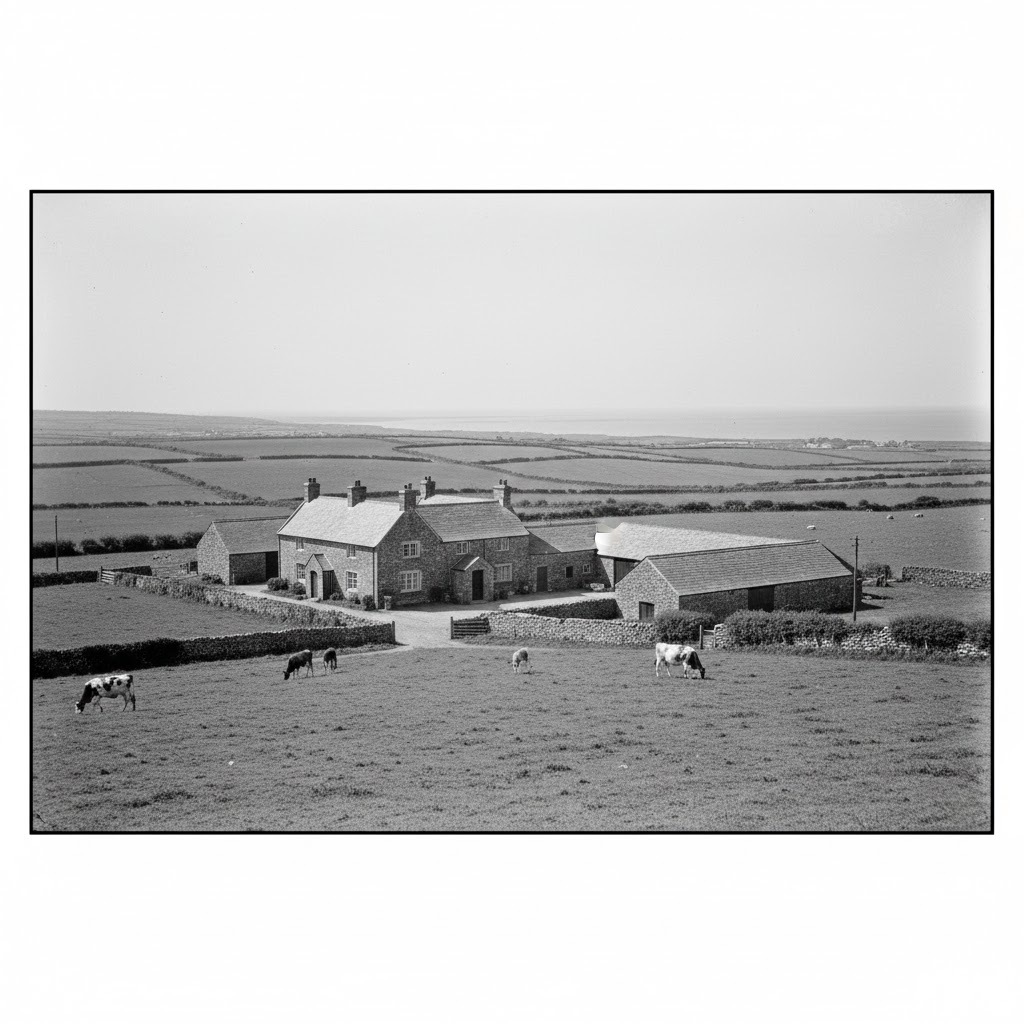
An auction at the Law Chambers, Princess Square, Plymouth, offered for sale the freehold farm of Old Barton, Wembury, with vacant possession. The farm, nearly 80 acres within a ring fence, included over 20 acres of pasture, 37 acres of ley grass, and further tillage land.
The property boasted a superior farmhouse with reception rooms, dairy, kitchen, offices, bedrooms, bathroom, electric light, and power. Extensive stone-built, slate-roofed outbuildings included cow standings fitted with a Gascoigne milking machine and electric lighting. The sale was directed by the owner, Mr. H. O. Lugar, who also arranged viewings at the farm.
On the same day, another lot under the same auctioneer concerned Churchways Field, between Elburton and Plymstock, but Old Barton stood out as the major Wembury estate property on offer.
Source: Western Morning News, 4 Sept 1947.
Entries are summaries and interpretations of historical newspaper reports.