
On This Day in Wembury — 16 September 1899
Sheep Killed by Dogs at Wembury
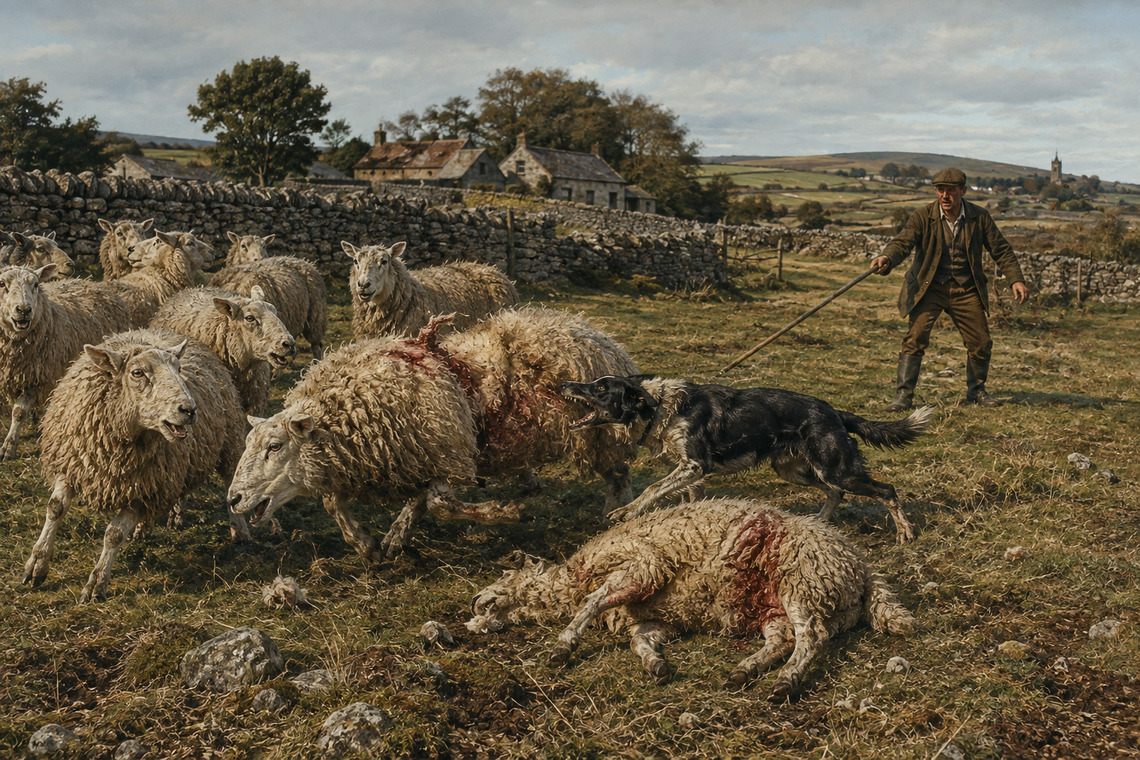
On 16 September 1899, the Western Weekly News reported a case at Plympton County Court which revealed just how devastating a loose dog could be among a flock of sheep.
The dispute concerned Mr John Wilson, a farmer at Wembury, and Mr Edward Henry Prowse of Plymstock. Wilson claimed compensation after a dog belonging to Prowse was alleged to have attacked his sheep.
The trouble had begun in April. Wilson told the court that he had found a dog among his sheep and that several animals had subsequently been discovered badly injured. Some had been bitten so severely that they died, while others had to be destroyed.
Wilson claimed £16 15s for his losses.
There was considerable argument over whether Prowse's dog really was responsible. Witnesses described seeing dogs around the sheep and evidence was given about their behaviour, their appearance and where they had been seen. Prowse denied that his animal was the culprit and produced witnesses in its defence.
The judge was not entirely convinced by Wilson's case against this particular dog.
After hearing the evidence, His Honour gave judgment for the defendant, with costs. Wilson therefore received no compensation from Prowse.
The newspaper report is fascinating because it shows that sheep worrying was every bit as contentious in Wembury more than 125 years ago as it was until very recently when the sheep left the local farms. Farmers faced not only the loss of valuable animals but also the difficult business of proving exactly which dog had caused the damage.
Reflection: The setting has changed, but the problem has not. Wembury remains a place where farmland, livestock, public paths and dog walking exist side by side. This little court case from 1899 is a surprisingly modern reminder that a dog loose among sheep can cause terrible damage very quickly, and identifying the animal afterwards may be much harder than preventing the attack in the first place.
On This Day in Wembury — 16 September 1995
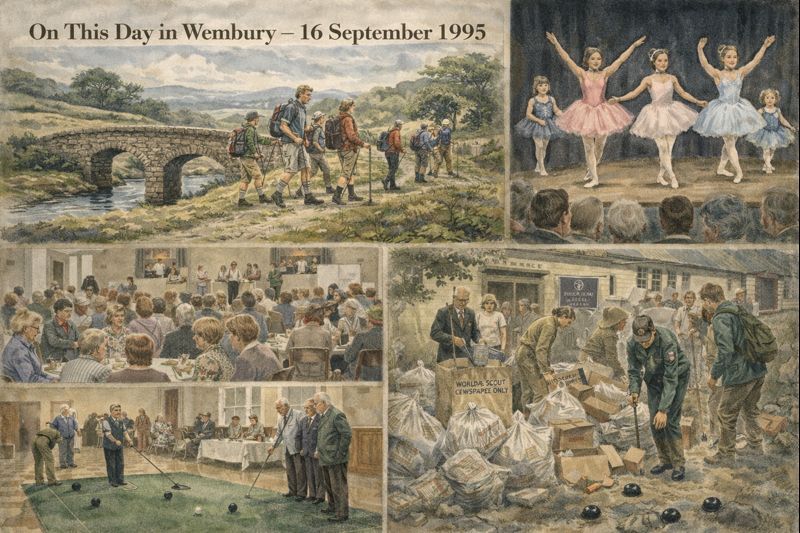
The Evening Herald reported on a busy late summer of village life. Wembury Ramblers announced their next outing to Postbridge and Cherrybrook, with a visit to the Powder Mills before returning through Bellever Forest. Meanwhile, the Wembury School of Dancing ended its term with a summer show that raised £273 for the village hall extension fund, with pupils earning commendations in exams and at the City of Plymouth Festival.
The Women’s Institute also held a successful open day with supper and entertainment, raising £300 for new toilets at St Werburgh’s Church and the village hall. Future events included a champagne lunch, a trip to Wells, and a jewellery evening in aid of charity.
Community spirit was evident elsewhere too: the newly formed Short Mat Bowls club launched fundraising efforts for equipment, and the Wembury Scouts prepared to donate all proceeds from their October waste paper collection to support medical equipment for children’s hospitals in Carei, Romania — continuing a link that had already seen scouts help renovate a rehabilitation centre and support a local orphanage.
Reflection:
This snapshot from 1995 shows how Wembury life thrived on shared effort. From walking groups to dancers, from the WI to the scouts, everyone pulled together with energy and creativity, raising funds for causes both local and international. It reminds us how the village hall and church improvements we take for granted today were built through raffles, shows, and collections — and how Wembury has long looked outward as well as inward, sending help to communities as far away as Romania.
Source: Evening Herald, 16 September 1995
 .
.
Entries are summaries and interpretations of historical newspaper reports.