
On This Day in Wembury
29 November 1852 — A Storm Clears the Seas Around Britain
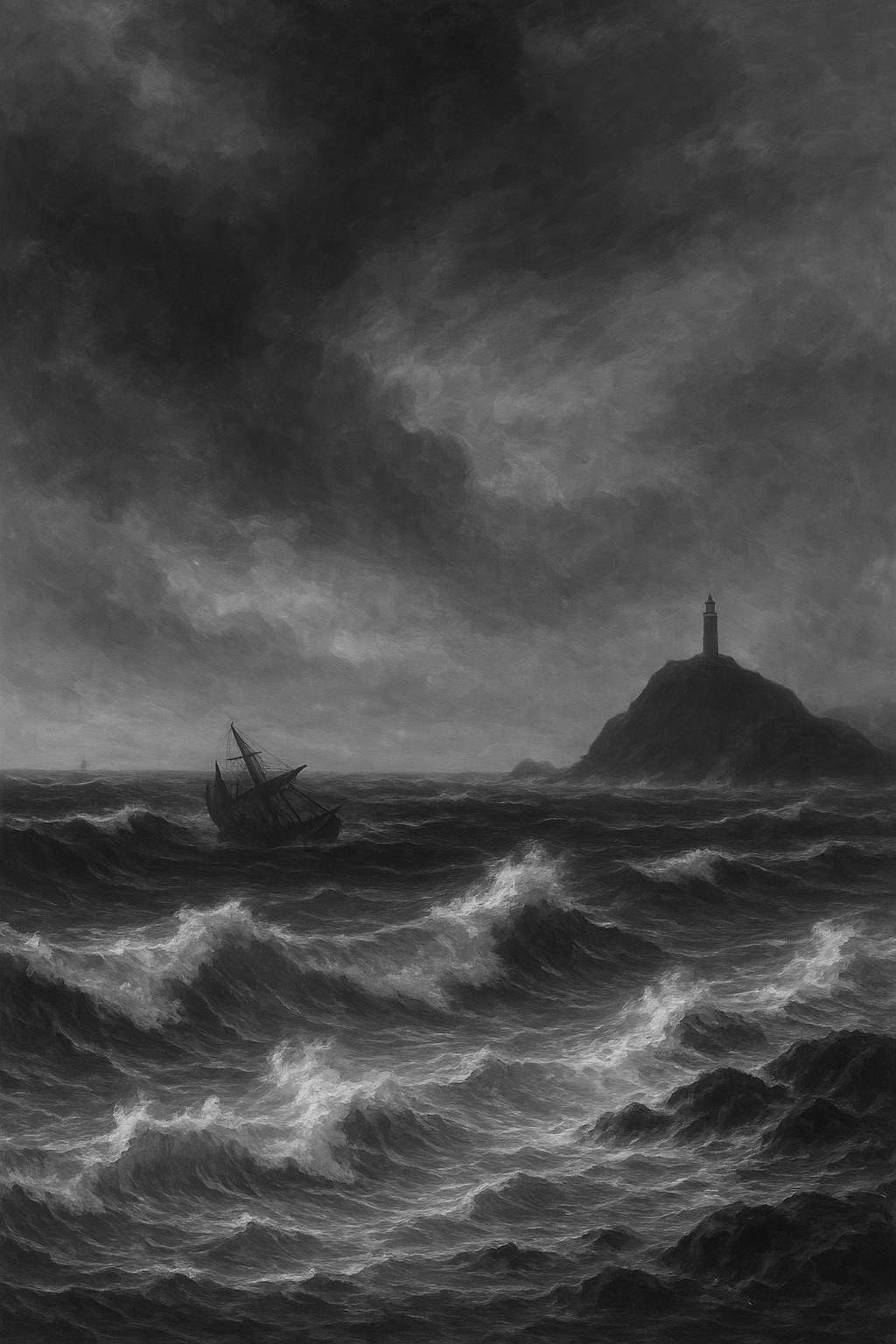
On this day the Admiralty’s Register of Wrecks recorded that by 29 November 1852 a violent south-westerly storm had driven almost every vessel around the British Isles into harbour. The gales, which began late in October and flared again through November, culminated in such sustained force that “by the 29th there was scarcely a vessel in the neighbourhood of the British Islands left at sea.”
The destruction was immense: 183 casualties were listed from the December gale that followed, with 102 ships totally wrecked, an average of three vessels a day. By year’s end, 1,115 wrecks had been recorded in 1852, with 920 lives lost. Among them was the Ocean Queen, wrecked on 26 December at Wembury, near the Mewstone, claiming fifteen lives.
This tragedy occurred even though the Eddystone Lighthouse — Smeaton’s great stone tower, completed in 1759 — was fully operational at the time. Its beam safeguarded ships navigating the open Channel, but in storms of such ferocity vessels were still driven onto the nearer reefs and headlands. Wembury Bay, with its rocks and exposed coastline, remained perilous despite the guiding light offshore.
Source: General Advertiser for Dublin and All Ireland, 14 January 1854, reporting from the Admiralty Register of Wrecks for 1852.
On This Day in Wembury — 29 November 1895
Farm servant steals from his roommate — then joins the Navy
On 29 November 1895, the Western Morning News reported an unusual case heard at Plympton Petty Sessions involving two servants employed at West Wembury Farm, Knighton.
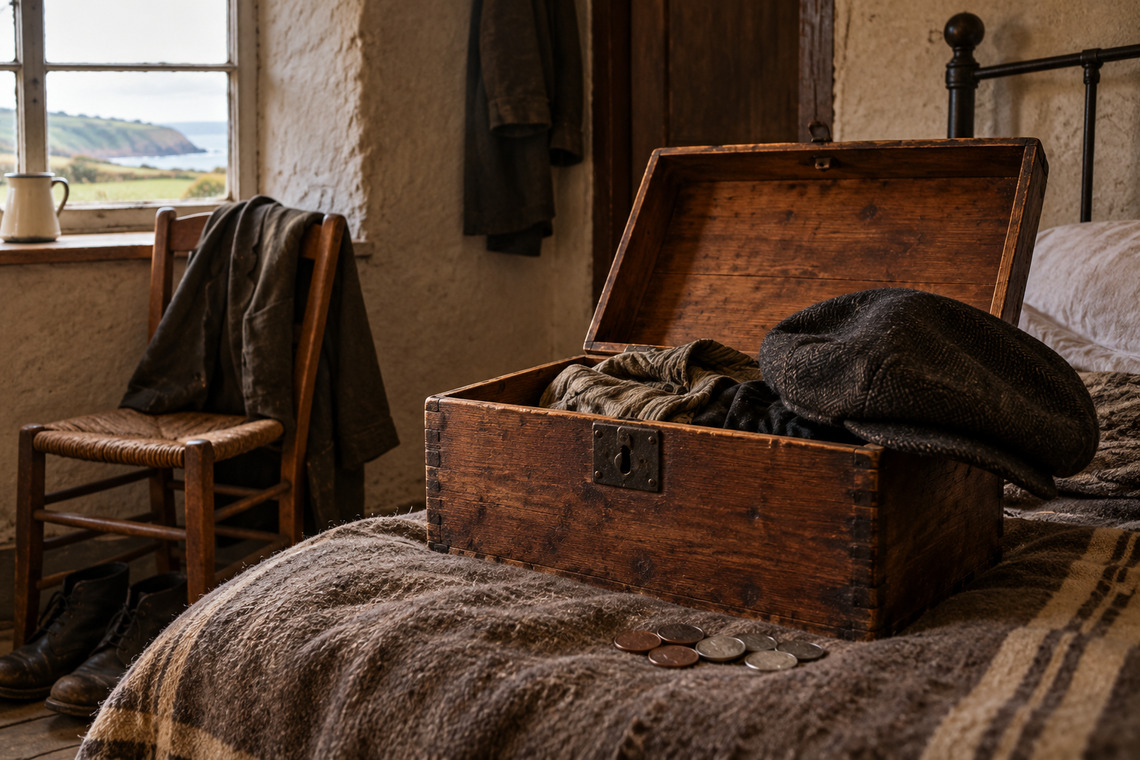
The accused was Ernest George Hooper, who was also using the surname Solley. He was charged with stealing 8 shillings and 6 pence and a cloth cap from a fellow servant, Henry James Milner.
Milner told the magistrates that his money had been safely in his box on 25 November. Hooper slept in the same room as him, but by the following morning he had disappeared — together with the money and cap.
Hooper had not simply left the district.
He was eventually arrested at the Royal Naval Barracks, where, remarkably, he had already attested as a stoker. In other words, after leaving the farm at Wembury he had attempted to begin a new career in the Royal Navy.
His previous history did him few favours in court. The magistrates were told that only a few months earlier, in July, Hooper had been serving with the Royal Artillery when he was convicted of stealing a watch and chain.
His latest venture from farm servant to naval recruit therefore proved extremely short-lived.
The magistrates sentenced him to one month’s hard labour.
The report provides a revealing little glimpse of life on a Wembury farm in the late Victorian period. Farms such as West Wembury employed resident labourers who might eat, work and sleep alongside one another, sometimes sharing the same room. For Henry Milner, his wooden box was effectively his private safe — and eight shillings and sixpence represented a meaningful amount of money to an agricultural worker.
It also shows how mobile working men could be. Within a matter of months Hooper had apparently moved between the Royal Artillery, agricultural employment at Wembury and an attempted enlistment in the Royal Navy.
But in November 1895 the journey ended not aboard a warship, but before the magistrates at Plympton.
A missing handful of coins and a cloth cap had followed him all the way from Knighton to the Royal Naval Barracks.
Source: Western Morning News, Friday 29 November 1895.
Entries are summaries and interpretations of historical newspaper reports.