
On This Day in Wembury — 3 December 1953
Seaside building plots for sale at Heybrook Bay
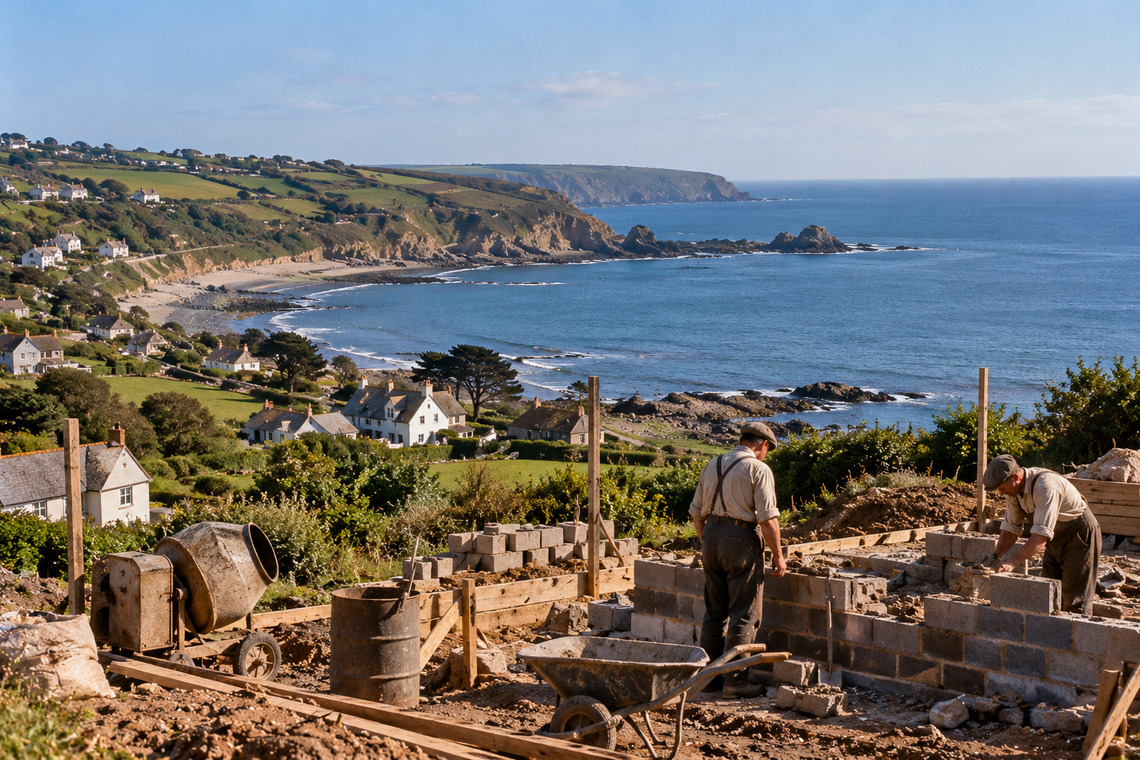
On 3 December 1953, the Bristol Evening Post carried a small property advertisement offering seaside building sites at Heybrook Bay.
The attraction was summed up in just a few words:
“sheltered, uninterrupted sea views”
Planning permission had already been obtained, and the plots were being offered for £75 each.
That price gives a fascinating glimpse of the continuing development of Heybrook Bay in the years after the Second World War.
The settlement itself was still relatively young. Much of the land around Heybrook Bay had been opened up for building following the break-up of the Langdon Estate in 1927, when large areas of former estate and agricultural land became available for individual houses and holiday properties.
Development gathered pace during the interwar years, helped by improved road access from Plymouth and the growing popularity of the coast for both holidays and permanent homes.
The Second World War interrupted that expansion, particularly with the military presence at nearby Wembury Point, but by the early 1950s building had resumed.
This 1953 advertisement shows that individual plots were still being marketed directly to people who wanted to build their own home by the sea.
The address given for enquiries was Stansell, Church Walk Wood, Wembury, suggesting a very local connection to the sale.
£75 sounds extraordinarily small today, but it was still a significant sum in 1953. What purchasers were buying, however, was something which remains central to Heybrook Bay’s appeal more than seventy years later: a plot on the South Devon coast with an open view across the sea.
Many of the houses that now make Heybrook Bay look like an established coastal village began in just this way — individual plots, modest houses and bungalows, and families attracted by a landscape that had only recently begun to change from farmland into a residential community.
This tiny classified advertisement therefore records another step in the creation of modern Heybrook Bay.
Source: Bristol Evening Post, Thursday 3 December 1953.
On This Day in Wembury — 3 December 1996
Dozens of firefighters battled a barn blaze on National Trust land near New Barton Farm, Wembury for more than six hours overnight. Crews from Plymstock, Plympton, Greenbank, Modbury, Ivybridge, and Crownhill, plus Plymouth’s emergency tender, were called at around 10.30pm and were still damping down after 4am. The Dutch barn contained straw, grain, and bags of nitrogen fertiliser, raising fears of lethal fumes. Firemen donned breathing apparatus and approached with extreme caution. About 20 tonnes of straw were destroyed, and a corner of the barn damaged, but the grain and fertiliser were saved. Leading Firefighter Rick Selley of Plymstock station said crews faced a “wall of smoke and flames.” The blaze was treated as suspicious, though experts noted straw can self-ignite as internal heat builds up inside damp bales.
Source: Evening Herald, 3 December 1996
Fires like this show the constant tension between farming practices and safety. A barn full of straw and fertiliser is both essential to agriculture and a potential hazard to the whole community. That winter night the quick response of local fire crews prevented disaster, but it also underlined how vulnerable even well-kept farms can be to sudden ignition — whether by accident or design.

Entries are summaries and interpretations of historical newspaper reports.