
On This Day in Wembury — 4 December 1824
Wrecks on Wembury Beach after the great storm
On 4 December 1824, the Durham Chronicle carried further reports of the devastating storm which had struck Plymouth and the South Devon coast a few days earlier.
The storm had begun on the evening of 22 November and continued through the night with extraordinary violence. Ships were wrecked or driven ashore all around Plymouth Sound, and Wembury was among the places badly affected.
At Wembury Beach, the brig John, commanded by Captain Wills and sailing from Leghorn for London, was driven ashore and badly wrecked.
The report feared that the vessel would go to pieces.
Most of those aboard were lost, but one particularly dramatic rescue was recorded. The captain’s wife was saved from the wreck, after being found in a desperately dangerous position among the broken vessel and rigging.
Nearby, another ship — the Welcome, arriving from the Canary Islands — had also been driven ashore at Wembury.
Her crew were saved, and the newspaper believed that much of her cargo might also be recovered.
The scale of the storm was far greater than a single wreck. Reports from Plymouth described vessels ashore at Mill Bay, Cattewater, Mount Batten and elsewhere, with crews drowned, cargoes scattered and ships smashed against the coast.
Wembury itself suffered badly. Later local accounts describe the sea surging across the beach and into Wembury Mill, smashing windows, filling the building with shingle and wreckage and damaging the machinery inside.
The wreck of the John became one of the most memorable incidents of the storm at Wembury.
The image of the captain’s wife surviving while the ship broke apart around her is especially striking. In an age before modern lifeboats, radios or organised coastal rescue services, survival could depend on the courage of local boatmen and preventive-service crews prepared to enter the surf themselves.
The storm of November 1824 was remembered for decades afterwards as one of the most destructive ever experienced around Plymouth.
At Wembury, the wreckage left on the beach and the damage to the mill must have made the aftermath impossible to ignore.
Source: Durham Chronicle, Saturday 4 December 1824.
Supporting context: contemporary reports of the November 1824 Plymouth storm and later Wembury historical accounts.

On This Day in Wembury
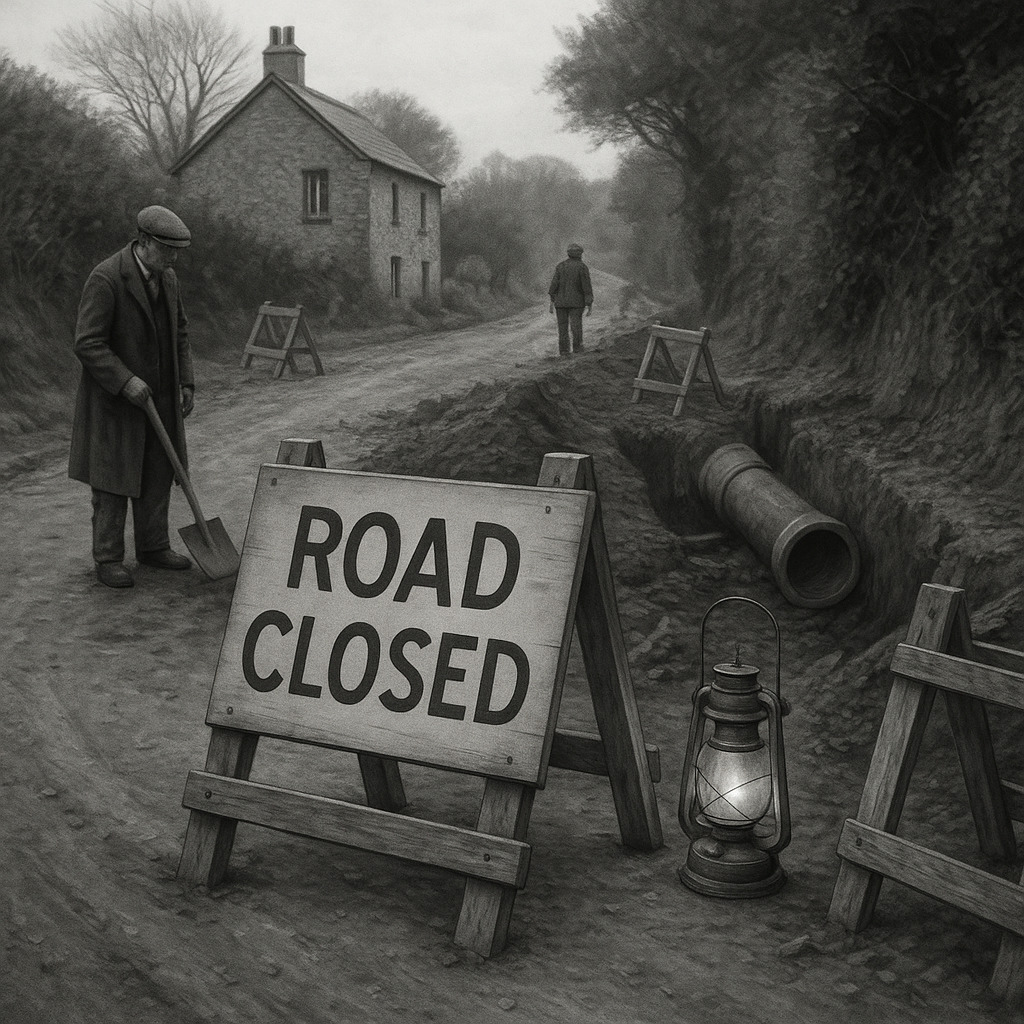
4 December 1937 — Gabber Road to Close for Water-Mains
The Western Morning News announced that the road from Down Thomas to Gabber in Wembury would be closed from 11 December for two weeks. The closure was to allow the laying of new water-mains, with traffic diverted along the Langdon Court road. The notice came from Percy T. Loosemore, Clerk to Plympton St. Mary Rural District Council.
This small announcement marked a big change for the parish. Until the late 1930s, much of Wembury had relied on wells, springs, rainwater collection, or hand-pumped supplies. The installation of mains water was part of a wider push across rural Devon to modernise public health infrastructure in the interwar years. For households at Gabber and Down Thomas, it would have meant easier access to clean water and fewer outbreaks of waterborne illness, as well as less reliance on carrying buckets up steep lanes.
Source: Western Morning News, 4 December 1937.
Entries are summaries and interpretations of historical newspaper reports.