
On This Day in Wembury — 19 December 1882
Langdon farmer fined for taking pheasants from traps
On 19 December 1882, the Western Morning News reported a poaching case heard at Yealmpton Petty Sessions involving John Williams, a farmer of Langdon, Wembury.
Williams had been summoned for using traps to kill game at Ford, Wembury, on 14 October.
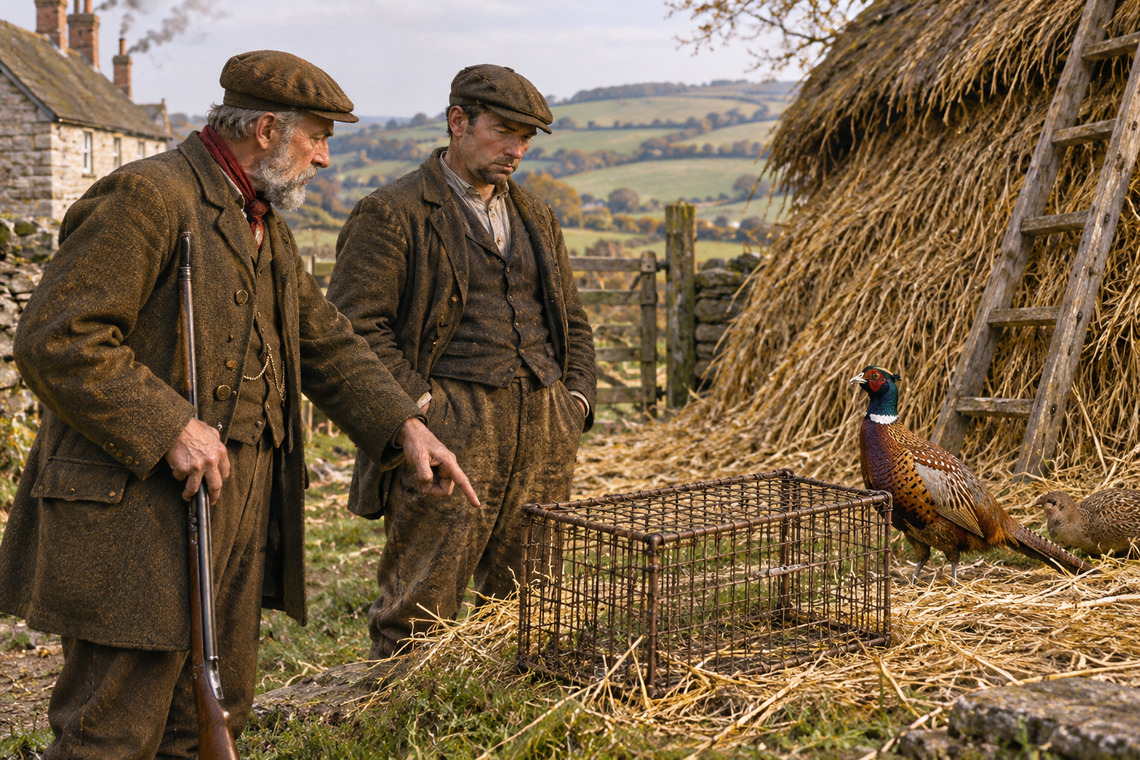
The prosecution relied on evidence from Francis Sason, a gamekeeper, who said he had seen Williams remove three pheasants from traps set about his corn ricks.
Williams disputed the gamekeeper’s version of events, but the magistrates found against him.
He was fined £3 including costs.
The court also ordered that the gun and game involved in the offence should be sold.
The case is an interesting example of the sometimes complicated relationship between farming and the Victorian game laws.
Pheasants were valuable game birds, protected for the benefit of landowners and shooting interests. But to a farmer they could also be unwelcome visitors. Large numbers of pheasants feeding around corn ricks and cultivated fields could consume or spoil valuable grain.
That could leave tenant farmers in an awkward position: expected to protect their crops, while at the same time being legally restricted in how they dealt with game birds belonging to the sporting estate.
Langdon and the surrounding countryside contained exactly this mixture of farmland and managed game coverts during the nineteenth century.
Only two years earlier, the Langdon estate had itself suffered a major organised poaching raid in which dozens of pheasants were taken. This 1882 case was very different: one local farmer, three birds and traps apparently placed beside his own corn.
But the law still treated the taking of the pheasants as an offence.
The £3 penalty was far from trivial. For a Victorian agricultural worker it represented several weeks' wages, and even for a farmer it would have been a significant punishment.
Behind this tiny court report is therefore a recurring tension in rural Victorian life: when a pheasant was eating a farmer's grain, was it a pest — or somebody else's property?
At Ford in Wembury in 1882, the magistrates had no doubt about the answer.
Source: Western Morning News, Tuesday 19 December 1882.
On This Day in Wembury — 19 December 1988
A Wembury couple were left badly shaken after burglars raided their home in Church Road, stealing more than £5000 worth of jewellery and household goods. Among the items taken were a Panasonic video recorder, handmade jewellery, a pair of 22ct gold quarter-inch earrings, an 18ct gold hunter bracelet valued at £1500, and a heavy 18ct gold sovereign chain. Police officer Helen Trethowan of Plympton CID appealed for witnesses, especially anyone who had seen a yellow saloon car in the area on Saturday afternoon. She also asked jewellers and members of the public to be alert for the distinctive items appearing for sale.
Source: Evening Herald, 19 December 1988
Incidents like this highlight how even quiet rural parishes were not immune to crime by the late 1980s. The list of stolen items — from the latest technology to traditional gold pieces — gives a snapshot of middle-class village life at the time, as well as the vulnerability people felt when such symbols of security and stability were suddenly taken.

Entries are summaries and interpretations of historical newspaper reports.