
On This Day in Wembury — 21 December 1844
A Wembury sow produces 44 piglets in just over a year
On 21 December 1844, the Northampton Herald published a remarkable farming anecdote from Knighton in the parish of Wembury.
The article was discussing the extraordinary rate at which pigs could multiply and gave one local example from the experience of John Wilson of Knighton.
In 1832, Wilson owned a sow which produced a litter of 16 healthy piglets.
That was followed by another litter of 14.
Then came a third litter of 14 more.
Altogether, the sow had produced 44 healthy piglets in just 54 weeks — and, according to the report, the entire lot survived.
The story was used to illustrate a much broader point about pig breeding. The newspaper calculated that, if numbers continued multiplying at the same sort of rate, a comparatively small starting population could theoretically become enormous within a decade.
The arithmetic was deliberately eye-catching, but the Wembury example was presented as a real case supporting the argument.
For a farming community such as Wembury in the early nineteenth century, pigs were extremely valuable animals. They could be kept on comparatively modest quantities of land, fed partly on household and farm waste, and converted into meat which could be salted or cured for later use.
A particularly prolific sow could therefore represent a substantial economic asset.
The reference to Knighton is also useful, because it gives us another small glimpse of everyday agricultural life in the parish long before Wembury began to develop into the village we know today.
In 1844, a national newspaper could point to Wembury not for its coast, church or estates, but for something much more practical:
one exceptionally productive pig.
Source: Northampton Herald, Saturday 21 December 1844.

On this day in Wembury — 21 December 1989
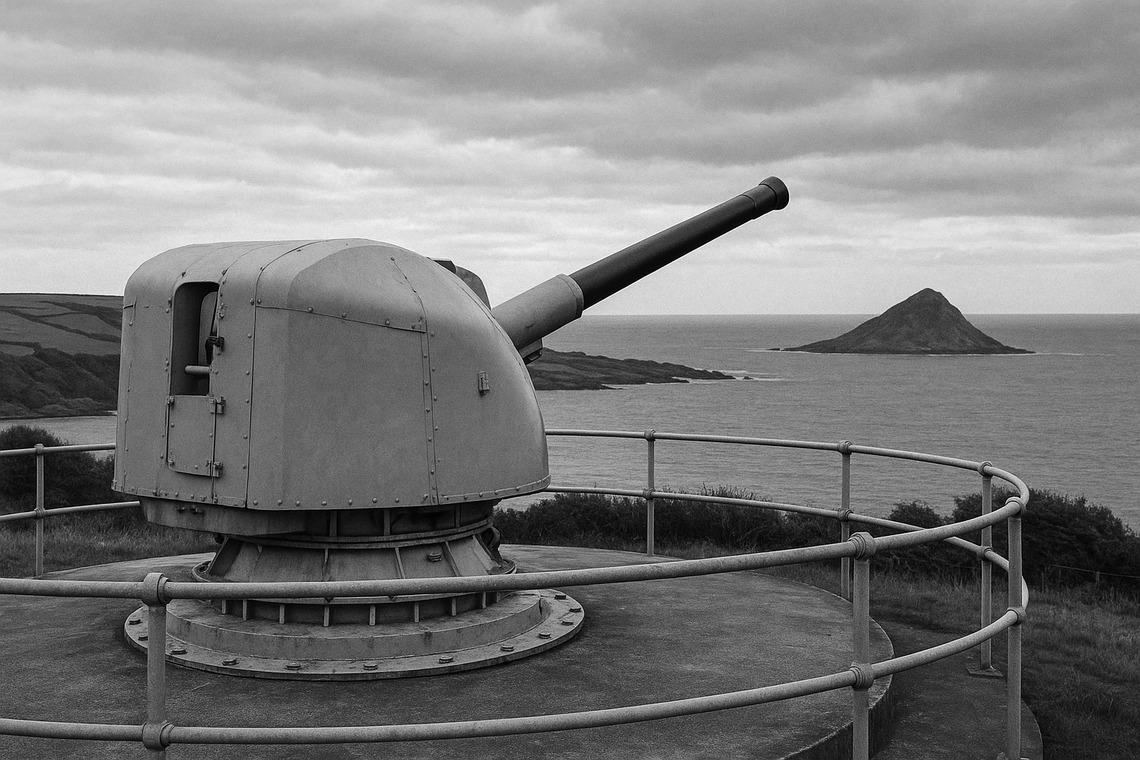
The Western Evening Herald printed a letter from M. Jenny of Wembury responding to reports about the proposed removal of the 4.5-inch gun turret from HMS Plymouth. She suggested that instead of stripping the frigate, the Dockyard might “have a look at the 4.5s on HMS Cambridge, Wembury, with a view to buying them instead.” The remark reflected long-standing local frustration with the naval gunnery school on Wembury Point, where live-firing practice using the heavy guns created repeated noise disturbance for the village. Jenny’s wry observation that “Wembury residents would be very pleased to lose them” captured the sentiment of many who had endured decades of thunderous firing echoing across the bay.
(Source: Western Evening Herald, 21 December 1989 — letter to the editor.)
Entries are summaries and interpretations of historical newspaper reports.