
On this day in Wembury — 31 December 1820
The Wembury oysters that caught two mice
On 31 December 1820, the Windsor and Eton Express printed one of the strangest Wembury stories to appear in the nineteenth-century press.
The article began with a tradesman who had found a mouse caught by the tail when an oyster suddenly snapped its shell shut. That reminded the writer of an older Devon story involving Wembury oysters.
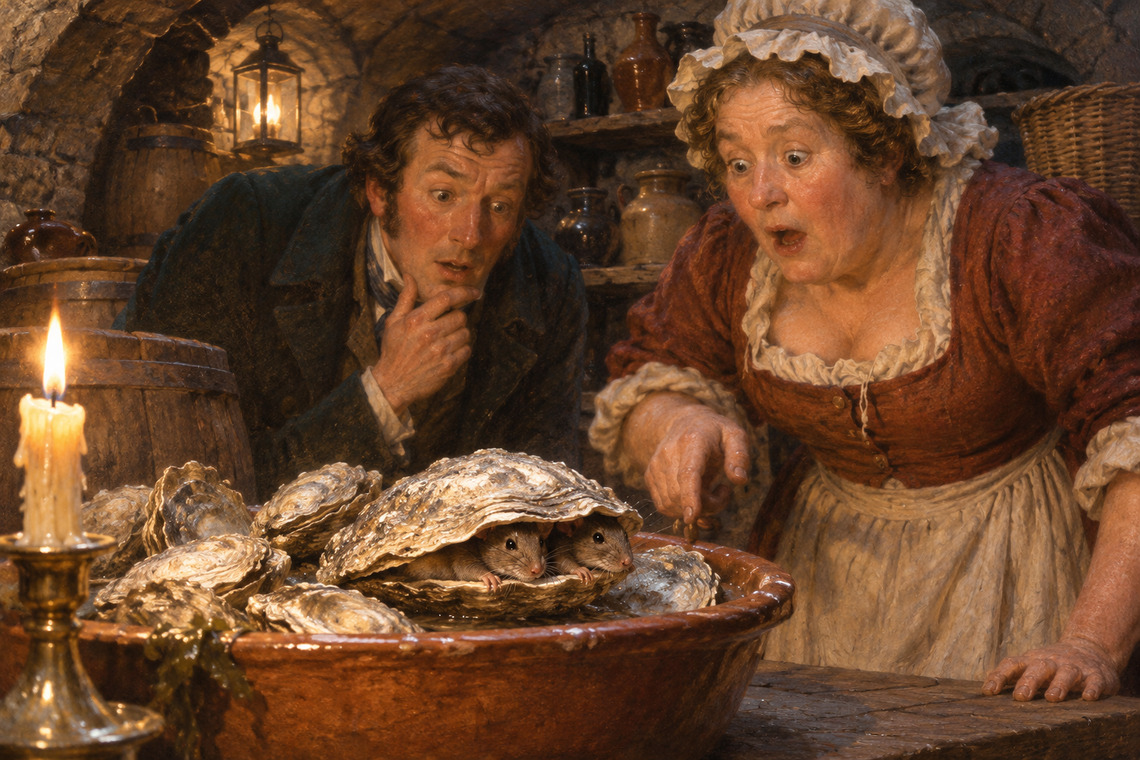
Around forty years earlier, at the New Inn in Ashburton, landlady Mrs Aldridge had placed a dish of Wembury oysters in an underground cellar to keep them cool.
According to the story, one particularly large oyster had opened its shell.
Two mice, apparently searching for food, approached it and began biting at the exposed flesh.
The oyster reacted.
Its shell snapped shut with enough force to trap both mice and, the account claimed, crush them to death.
The unfortunate pair were left hanging from the closed shell.
Rather than dispose of the bizarre discovery, Mrs Aldridge apparently turned it into an attraction. The oyster, complete with its two victims, was displayed for some time as a curiosity for visitors to the inn.
The tale was already well established before the 1820 newspaper report. John Britton and Edward Wedlake Brayley included it in their 1803 volume The Beauties of England and Wales, where they said it came from Richard Polwhele’s History of Devonshire.
The reference to Wembury oysters is especially interesting.
They were most likely taken not from the open beach at Wembury, but from the River Yealm and its lower estuary. Historical estate records from around the beginning of the nineteenth century refer to rights over the Yealm’s “water, piscary, fishing, oysterage and royalty”, showing that oyster fishing formed part of the local economy.
That makes sense geographically. Oysters favour sheltered estuarine water and firm beds, and the Yealm has a long history of shellfish gathering and cultivation.
So when old sources describe “Wembury oysters”, they were probably referring to oysters taken from the Wembury side of the Yealm estuary, perhaps from managed or naturally productive beds connected with the Wembury estate.
In other words, “Wembury oysters” may once have been a recognisable local product.
The biology behind the mouse story is less straightforward. Oysters certainly close their shells with considerable force when disturbed, but some of the more elaborate explanations repeated in old natural histories should probably be treated with caution.
The core of the story, though, is wonderfully memorable.
Two mice went looking for supper in a cellar in Ashburton.
They chose the wrong Wembury oyster.
Source: Windsor and Eton Express, Sunday 31 December 1820.
Earlier account: Britton & Brayley, The Beauties of England and Wales (1803), citing Polwhele’s History of Devonshire.
Supporting context: early nineteenth-century Wembury estate records referring to oysterage and fishing rights in the River Yealm.
On this day in Wembury — 31 December 1980
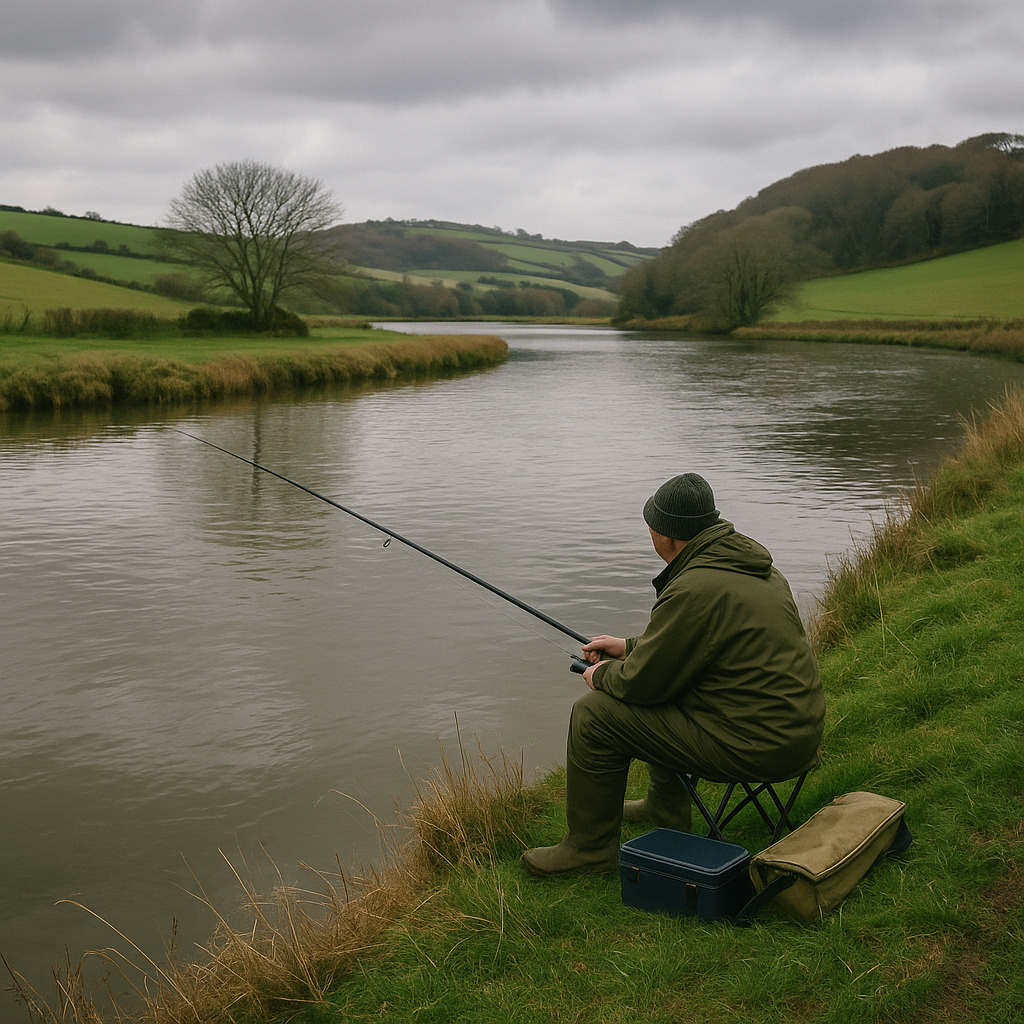
The Western Morning News reported lively holiday-season fishing on the River Yealm, with tidal marks at Puslinch Bridge and Cofflete Creek producing excellent results. Numerous flounder to 2 lb 2 oz were taken on small ragworm, and several fish topped 3 lb, the best weighing 3 lb 9 oz and falling to an angler named Bill. For Joe Grubb of Wembury, it was a day to remember: alongside four flounder up to 2 lb 2 oz, his bait was taken by a fine mullet of 4 lb 2 oz — a highly unusual catch in the Yealm at that time of year. Mullet enthusiasts often struggled to find a fish of that size even in summer, making the late-December specimen especially remarkable.
(Source: Western Morning News, 31 December 1980 — holiday season fishing report.)
Entries are summaries and interpretations of historical newspaper reports.