
On This Day in Wembury — 30 November 1887
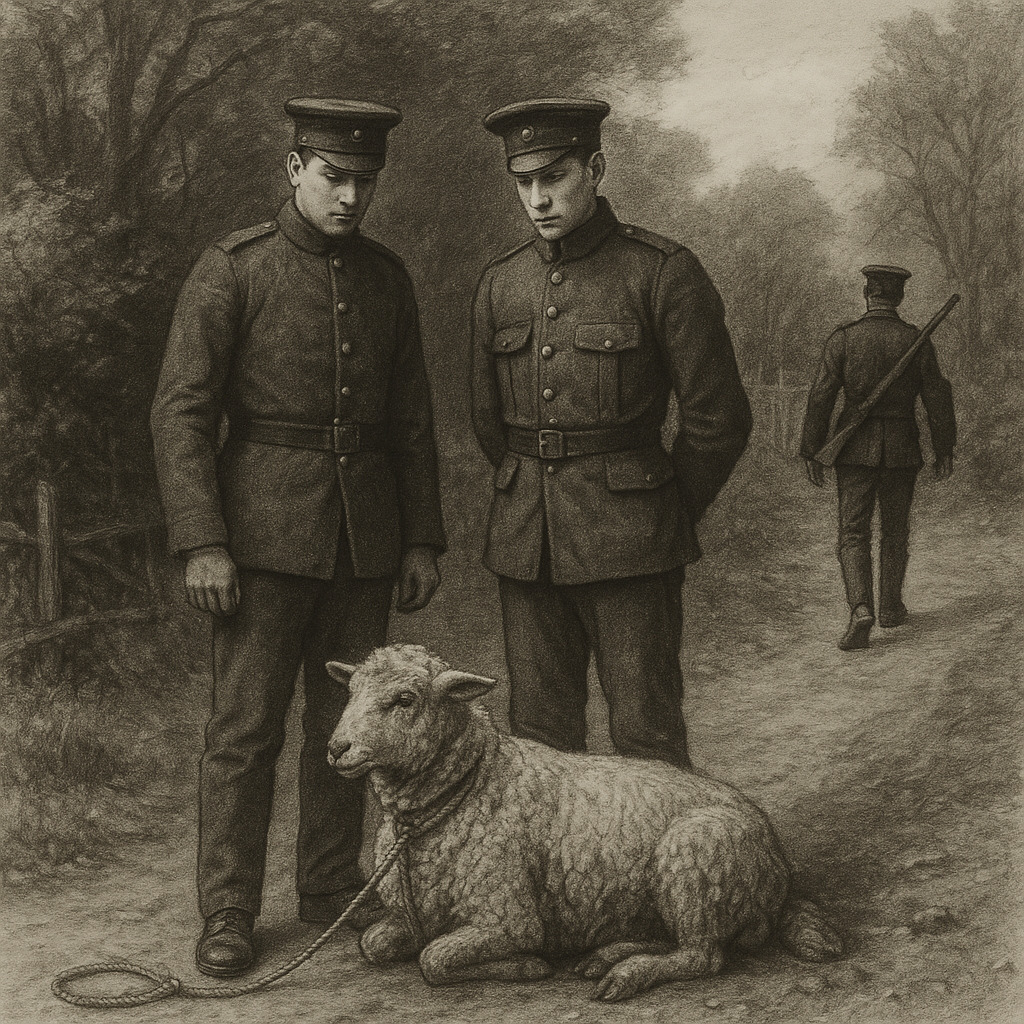
On this day three soldiers of the Royal Artillery were accused of stealing a ewe sheep from Herbert Josiah Pitts Giles at Wembury. The offence took place on 30 November 1887. James Costello, aged 31, was tried but acquitted when the prosecution offered no evidence against him. Frederick Smith, 23, and Thomas Spencer, 23, admitted their part and were each sentenced to six weeks’ imprisonment with hard labour.
Sheep stealing had long been treated as a serious crime in rural Devon. Earlier in the century it could bring the death penalty or transportation, but by the late Victorian period the punishment was prison with hard labour. The judge noted the men were members of a distinguished corps and hinted they might not be allowed to re-enlist, although the court had no control over that. The case shows how seriously rural theft was still viewed, even as the law moved away from older harsh punishments.
Source Express and Echo, 4 January 1888
On This Day in Wembury — 30 November 1934
Electricity network extended across Wembury and the Yealm
On 30 November 1934, the Western Morning News reported further expansion of the electricity network operated by Plympton Rural District Council.
The council’s clerk, Mr Percy T. Loosemore, had recently returned from London after discussions with the Air Ministry and the Electricity Commissioners about future development of the system.
The council was planning two main electricity routes. One would run from Egg Buckland towards Plympton, while another would extend through the rural district towards Newton Ferrers and Revelstoke.
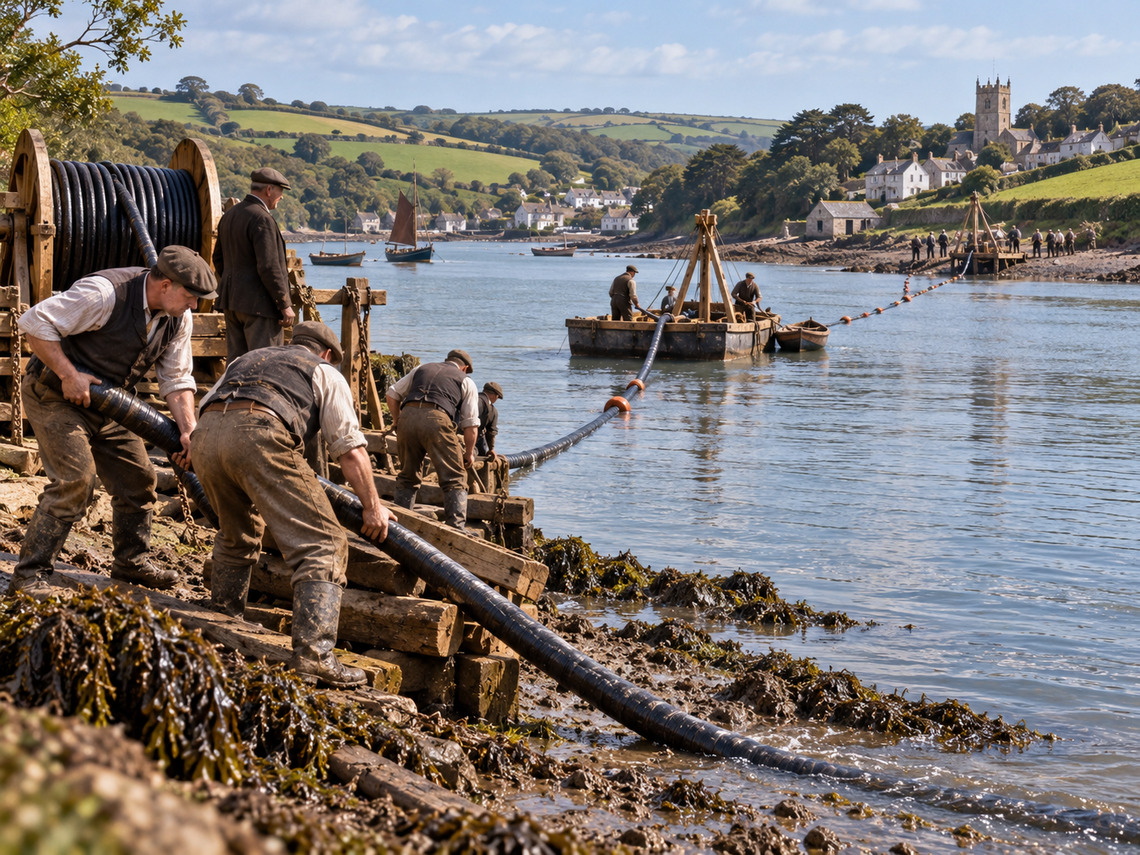
One of the most ambitious parts of the scheme involved carrying the supply across the River Yealm. Electricity was being taken from the Yealmpton side towards Newton Ferrers and Revelstoke by means of a submarine cable laid beneath the river.
The same expansion also enabled the council to extend supplies to Staddiscombe and Wembury.
Electricity had already begun to appear in Wembury during the late 1920s and early 1930s. Langdon Court was the first property in the parish to be connected, followed by Bay Cottage, while St Werburgh’s Church had replaced its hanging oil lamps with electric lighting by the end of the 1920s.
A dedicated electricity substation was also established at Wembury Point in 1933.
The 1934 works were therefore part of a wider process of extending mains electricity across an area of scattered villages, farms and hamlets where distance and difficult terrain made distribution more complicated than in towns.
The Yealm crossing is a particularly striking example of that work. Laying a cable beneath the river allowed the network to link communities on both sides of the estuary and helped create a more extensive rural supply system.
For residents, the spread of electricity gradually transformed everyday life. Electric lighting was the most immediate benefit, but over time it also opened the way for new forms of heating, cooking and household equipment.
The process was gradual, and some outlying properties would wait longer than others, but by the mid-1930s Wembury was becoming part of a modern electrical network extending across the South Hams.
Source: Western Morning News, Friday 30 November 1934.
Supporting context: Wembury Local History Society material on the introduction of electricity in the parish.
Entries are summaries and interpretations of historical newspaper reports.