
On This Day in Wembury — 5 December 1935
The contents of a Wembury home go under the hammer
On 5 December 1935, the Western Morning News advertised the sale by auction of the antique furniture and effects of Sir P. McMahon, Baronet, of Wembury.
The sale was to take place at the Old Priory in Plympton, then being used as Baker’s Repository, with Viner, Carew & Co. acting as auctioneers.
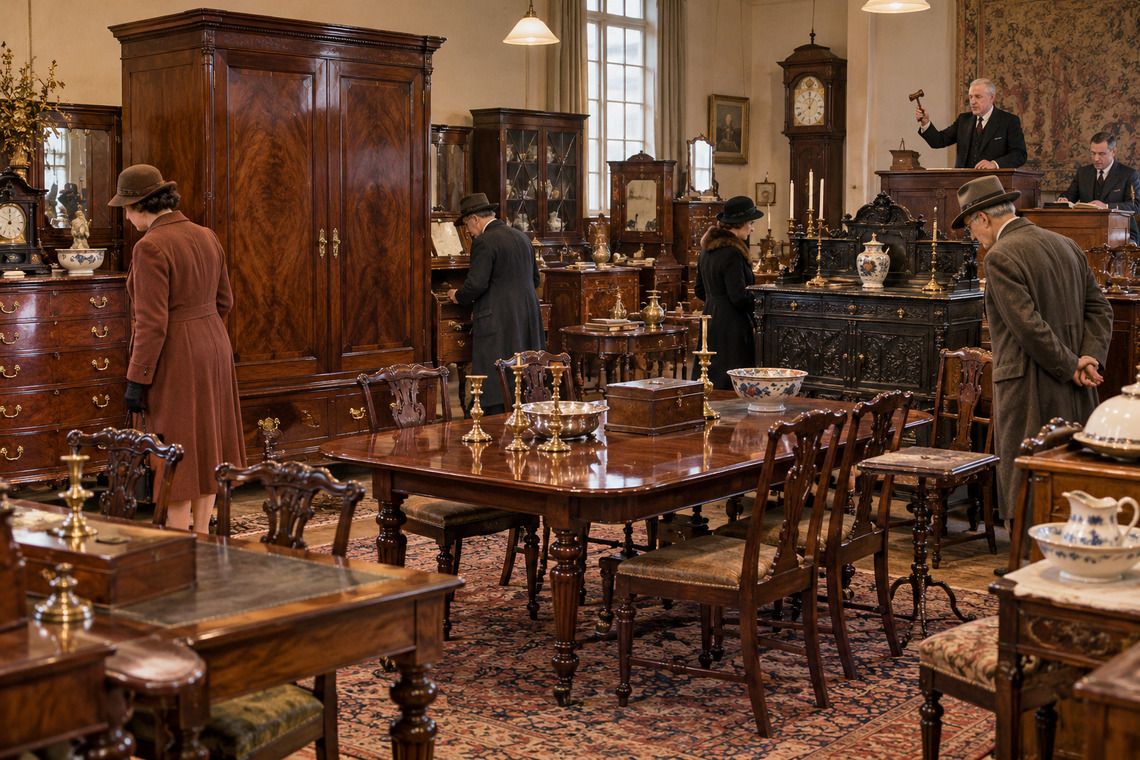
The list of furniture gives a wonderfully detailed glimpse of the contents of a well-appointed Wembury home in the mid-1930s.
Among the principal pieces was a mahogany breakfront wardrobe, about 3 feet 4 inches wide, along with several chests of drawers, including one with brass drop handles and another described as Sheraton in style.
There was also a mahogany inlaid writing table, a carved chest, a four-foot-six-inch mahogany wardrobe, a dining table, a black oak carved sideboard and a mahogany washstand with fluted legs.
Smaller pieces included a china cabinet, card table, wall clock, bed table, pianola and records, carpets, chairs, bedsteads, cupboards and tables.
The advertisement reads almost like a room-by-room inventory.
Mahogany dominates the list, reflecting the continuing popularity of substantial Victorian and Edwardian furniture in homes of the period, while references to Sheraton styling, brass handles, carved oak and inlay suggest that the collection mixed older pieces with later reproductions and fashionable antiques.
The sale was scheduled for Wednesday 11 December 1935 at 2 p.m., with viewing the previous day from 2 until 4 p.m. and again on the morning of the auction.
The McMahon referred to was almost certainly Sir William Patrick McMahon, 7th Baronet, who had succeeded to the Ashley Manor baronetcy in 1935 following the death of Sir Eyre McMahon.
For us, the most interesting part is not simply who owned the furniture, but the picture the advertisement creates of domestic life in Wembury before the Second World War.
A dining room furnished in dark polished wood, a pianola with its rolls and records, heavy wardrobes, brass-handled drawers and patterned carpets belonged to a style of home that was already beginning to disappear.
By December 1935, those rooms were being dismantled piece by piece and sent to auction in Plympton.
Source: Western Morning News, Thursday 5 December 1935.
On this day in Wembury — 5 December 1973
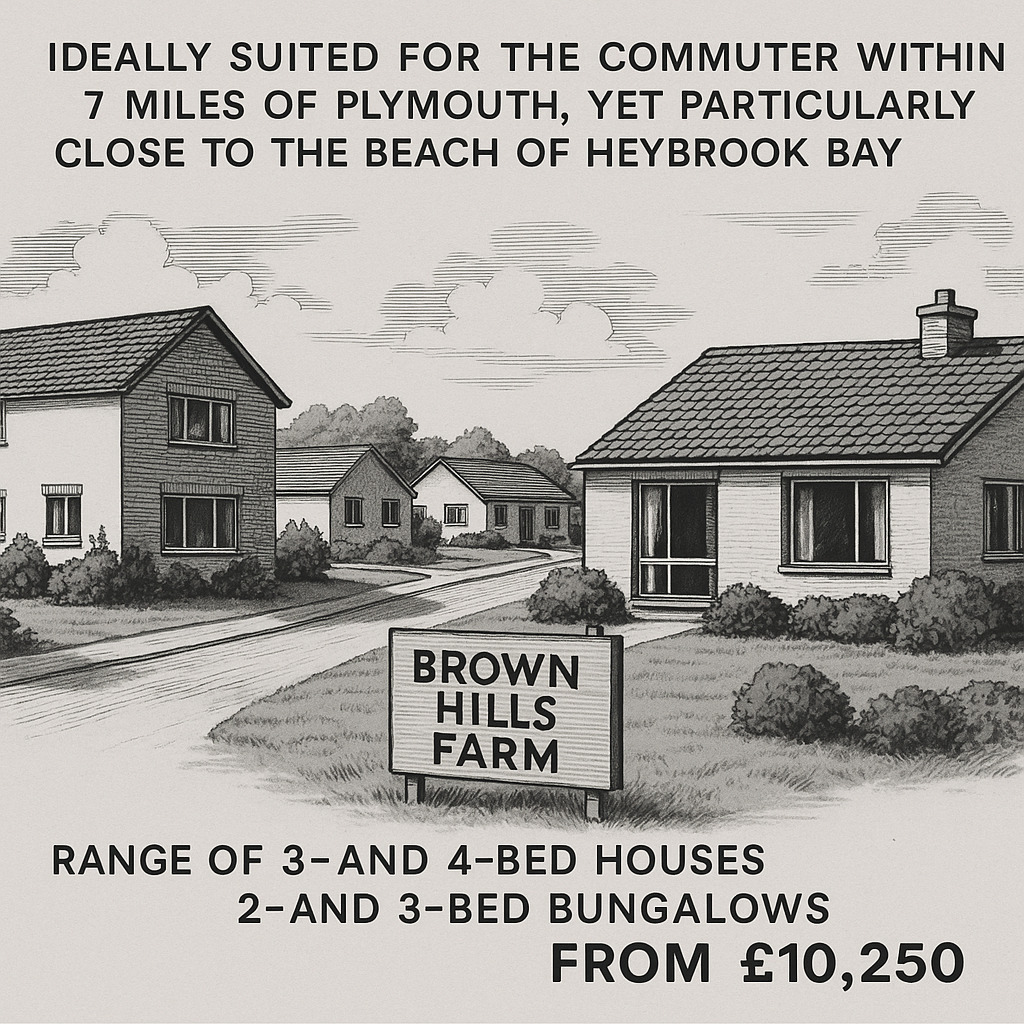
The Torbay Express and South Devon Echo carried an advert for Brown Hills Farm, Wembury: “ideally suited for the commuter within 7 miles of Plymouth, yet particularly close to the beach of Heybrook Bay,” offering a level-site range of 3- and 4-bed houses and 2- and 3-bed bungalows priced from £10,250. In today’s money that entry-level price is roughly £158,000 using CPI inflation, which underlines how sharply coastal values have outpaced general prices over time. By contrast, recent sales and averages in Heybrook Bay typically sit in the £430k–£800k+ range depending on street and outlook, with an area average around £620k in the last year.
(Source: Torbay Express and South Devon Echo, 5 December 1973 — Brown Hills Farm housing advert.)
Entries are summaries and interpretations of historical newspaper reports.